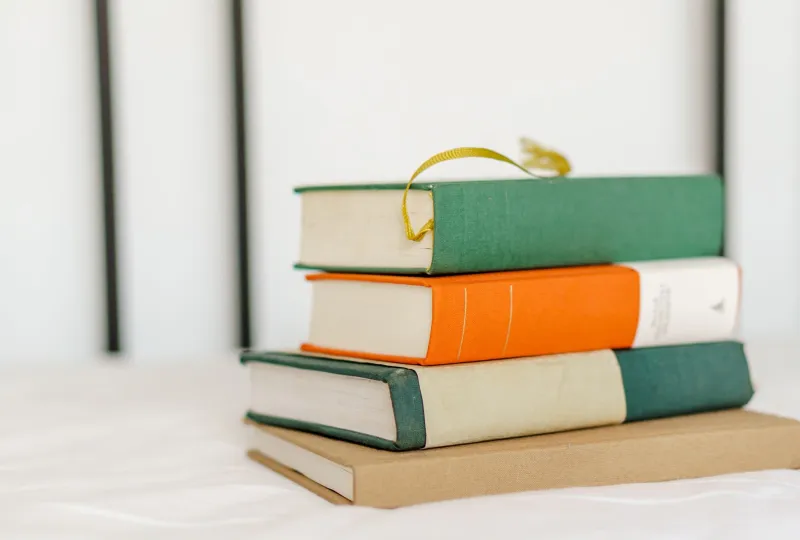
Between the Pages: The Forgotten Objects That Turn Our Books Into Private Diaries
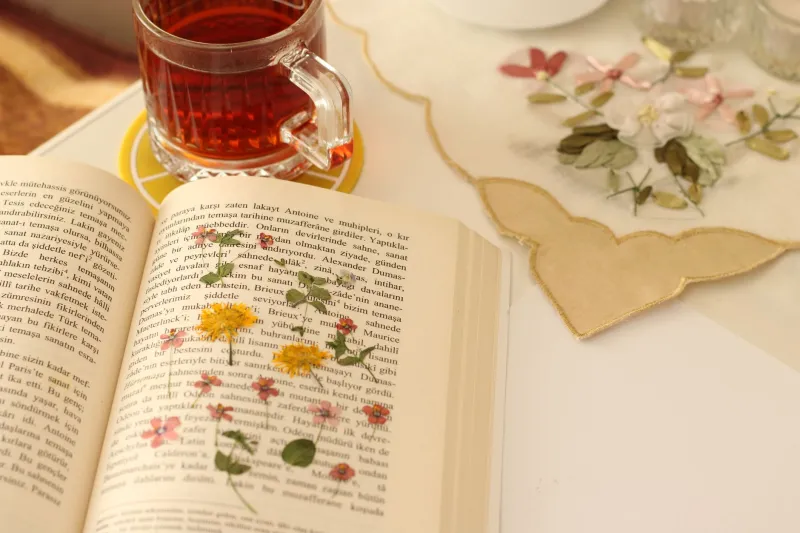
The Bookmark We Never Meant to Leave
There is a particular quality of surprise that belongs only to old books. You pull a volume from the shelf—perhaps one you have not touched in five or six years—and as you fan the pages, something falls out. A folded slip of paper. A dried flower stem. A photograph with a stranger's handwriting on the back. For a moment, the book itself becomes secondary. What you are holding is an artifact, and the story it tells is entirely your own.
The improvised bookmark is one of the most intimate objects a reader possesses, precisely because it was never intended to be preserved. A proper bookmark is a conscious choice, a small act of curation. The accidental one—the gas station receipt, the birthday card someone handed you at a party, the sticky note with a phone number you no longer recognize—is something else entirely. It is evidence. It is the moment you stopped reading, rendered physical.
When Reading and Living Intersect
Books do not exist in isolation from the rest of our lives, however much we might wish they did. We read during lunch breaks and long flights, in waiting rooms and hospital corridors, on quiet Sunday mornings and restless nights when sleep refuses to arrive. The objects we press between the pages are not chosen for their literary merit. They are chosen because they happened to be nearby.
This is precisely what makes them so affecting. A formal journal entry requires intention—a decision to record, to reflect, to shape experience into language. The improvised bookmark requires nothing of the sort. It simply captures the texture of an ordinary moment: what you had just purchased, where you had just been, who had just written to you. When you encounter it years later, the book's narrative briefly yields to your own.
Consider the receipt. It is, objectively, a mundane object—a thermal-printed record of a transaction that seemed entirely forgettable at the time. And yet, found inside a novel you read during a particular summer, it becomes something else. The date printed at the top locates you precisely. The items listed—a bottle of wine, a rotisserie chicken, a bouquet of flowers—suggest a context, perhaps even a person, that the years have rendered distant. The receipt, in other words, has become a primary source.
The Objects That Carry the Most Weight
Not all accidental bookmarks are created equal. Some are merely curious; others carry a quiet emotional charge that is difficult to articulate without sounding sentimental.
Pressed flowers and leaves occupy a category of their own. They are the most visually striking of these objects, and they have the longest tradition—people have been pressing botanicals inside books for centuries, though rarely with the conscious intention of preservation. More often, a wildflower was picked on a walk and slipped between pages because the hands needed somewhere to put it. Decades later, it survives as a delicate, faded record of a specific afternoon in a specific field or garden, the petals still holding the ghost of their original color.
Letters and cards are perhaps the most narratively loaded. A postcard from a friend who has since moved away, a birthday card signed by relatives you no longer see regularly, a handwritten note whose context has grown opaque with time—these objects carry the full weight of human relationship. They remind us that our reading lives and our relational lives are not separate territories. They overlap constantly, and the books on our shelves hold the evidence.
Photographs, when they appear, are the most disorienting. A snapshot of a vacation, a candid image from a gathering, a photo-booth strip from some forgotten evening—these demand a kind of reckoning. Who were you when you stopped reading at this particular page? What were you anticipating or recovering from? The photograph does not answer these questions, but it insists that they be asked.
What These Objects Reveal About How We Read
There is a craft dimension to this phenomenon that deserves attention, particularly for writers who think carefully about the relationship between books and the lives that receive them.
The accidental bookmark suggests that reading is never a purely intellectual activity, sealed off from circumstance. We bring our full selves to the page—our distractions, our preoccupations, our physical surroundings—and the books we love absorb some portion of that context. This is why rereading a novel you first encountered during a difficult period can feel almost archaeological. The text has not changed, but you are excavating layers of personal history alongside the author's narrative.
For writers, this is both humbling and instructive. The book you labored over for years will eventually serve as a container for someone else's grocery receipt. Your carefully constructed sentences will share space with a child's drawing, a torn concert ticket, a handwritten reminder to call the dentist. This is not a diminishment. It is, in fact, the highest form of integration—the moment when a story becomes so woven into a reader's life that the boundary between the two begins to dissolve.
The Archive We Never Knew We Were Keeping
Most of us do not think of ourselves as archivists. We do not approach our bookshelves with the methodical intention of a historian. And yet, if you were to spend an afternoon pulling every volume from its place and examining what falls out, you would likely discover a remarkably complete record of your reading life—and, by extension, your lived life.
The objects that accumulate between pages are a testament to the fact that books accompany us. They travel in bags and backpacks, sit on nightstands and kitchen tables, get tucked into carry-on luggage and left in vacation rentals. Wherever we go, we tend to bring something to read, and wherever we stop reading, we tend to leave something behind.
These small, forgotten artifacts are the connective tissue between the stories we absorb and the lives we inhabit. They are the proof, if any were needed, that reading is not an escape from experience but a form of engagement with it—a way of moving through the world with a little more attention, a little more feeling, and occasionally, a pressed flower marking the exact page where real life interrupted the fictional one.
The next time something falls from an old book in your hands, resist the instinct to discard it immediately. Hold it for a moment. Let it do its work. The story it tells may be briefer than the one between the covers, but it belongs entirely to you.