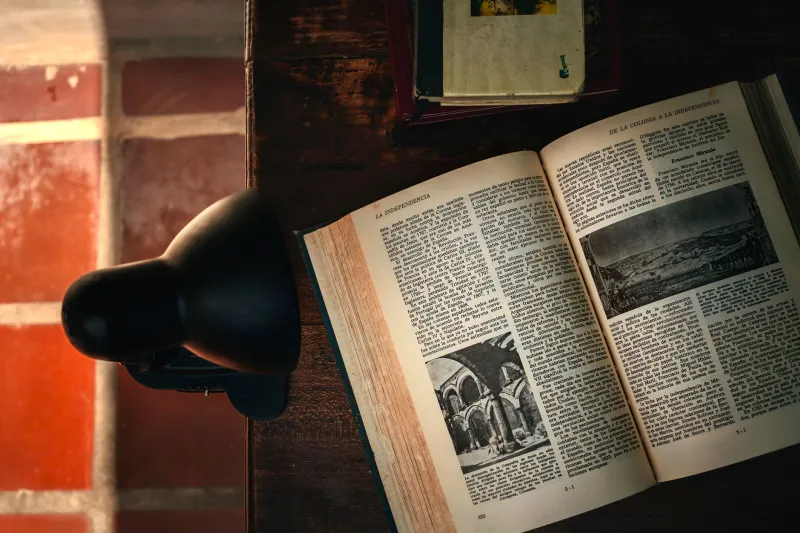
Lost in Translation: The Impossible Promise of Bringing Beloved Books to the Screen
The announcement arrives with predictable regularity: a beloved novel, often one that shaped a generation of readers, has been optioned for adaptation. The news is met with equal parts excitement and dread — a combination of emotions that says something revealing about the relationship between literature and film, and about how deeply readers invest in the stories they love.
The history of Hollywood is, in no small part, a history of literary adaptation. From the earliest silent films drawn from stage plays and novels to the prestige streaming productions of the present day, the industry has returned again and again to the written word as a source of material. The results have ranged from revelatory to catastrophic, with the full spectrum of outcomes in between. What determines which side of that divide an adaptation lands on is a question worth examining carefully — not merely as a matter of critical taste, but as an inquiry into the fundamental nature of storytelling itself.
What the Camera Cannot See
The most significant challenge facing any literary adaptation is one that is rarely discussed with sufficient candor: prose has access to the interior of a human consciousness in a way that cinema, by its nature, does not.
A novelist can place the reader directly inside a character's mind — not merely observing their actions, but experiencing their doubts, their contradictions, their private negotiations with memory and desire. This interiority is not incidental to many great works of fiction. It is the work itself. When Holden Caulfield narrates The Catcher in the Rye, the voice is the novel. When Humbert Humbert constructs his elaborate self-justifications in Lolita, the unreliable narration is not a stylistic device — it is the moral argument of the book.
Film must externalize what prose internalizes. It must find visual and auditory equivalents for states of mind that exist, in their literary form, entirely without image. This is not an inherent limitation of cinema — it is a different medium with its own distinct tools. The problem arises when adaptations attempt to replicate the interior experience of prose rather than translate it into cinematic terms.
The Faithful Adaptation Fallacy
Among readers, there is a persistent belief that fidelity to the source material is the primary virtue of a successful adaptation. This belief, while understandable, is frequently at odds with the evidence. Some of the most celebrated adaptations in American film history have taken significant liberties with their source texts — and some of the most faithful have been among the least successful.
Stanley Kubrick's adaptation of Stephen King's The Shining is perhaps the most instructive example. King himself famously objected to the film, and his objections were not without basis — Kubrick departed substantially from the novel's emotional architecture, transforming what King intended as a story about addiction, family, and redemption into something colder and more abstract. Yet the film endures as a masterwork of American horror cinema. Kubrick did not adapt King's novel so much as respond to it — using its premise as a launching point for his own cinematic investigation of isolation and madness.
This distinction — between adaptation as replication and adaptation as response — is crucial. The most successful translations from page to screen tend to be made by filmmakers who understand what the original work is fundamentally about, and who then ask how cinema, with its particular tools, can honor that understanding rather than merely illustrate the plot.
When the Magic Survives the Journey
It would be misleading to suggest that literary adaptation is inevitably a diminishing enterprise. There are genuine triumphs — instances in which the film not only preserves what made the source material extraordinary but discovers new dimensions within it.
Brokeback Mountain, adapted from Annie Proulx's short story by screenwriters Larry McMurtry and Diana Ossana, represents one such achievement. Proulx's prose is spare and geographically precise, carrying enormous emotional weight in very few words. The film, directed by Ang Lee, found visual equivalents for that spare precision — the vast Wyoming landscape functioning as an externalization of the characters' internal constraints, the silence between the two men speaking volumes that dialogue could not. The adaptation did not simply transfer the story; it found the story's visual soul.
Similarly, Paul Thomas Anderson's adaptation of Thomas Pynchon's Inherent Vice succeeded not by resolving the novel's deliberate incoherence but by leaning into it — trusting the audience to inhabit the same pleasurable confusion that makes the book so distinctive. These successes share a common characteristic: filmmakers who approached the source material as collaborators rather than illustrators.
The Stories That Resist the Camera
Some works of literature appear, by their very nature, to resist visual translation. This resistance is not always a matter of complexity or length — it is frequently a matter of medium-specificity. Certain novels derive their power from qualities that are simply untranslatable into image and sound.
Virginia Woolf's Mrs. Dalloway has been adapted for the screen, most notably in the 1997 film starring Vanessa Redgrave. The film is competent and respectful, yet it cannot reproduce the novel's stream-of-consciousness technique — the way Woolf moves through multiple consciousnesses simultaneously, collapsing time and perspective in ways that feel natural on the page and impossible on screen. The film gives us the events of Clarissa Dalloway's day. The novel gives us the texture of consciousness itself. These are not equivalent offerings.
David Foster Wallace's Infinite Jest has been discussed as an adaptation candidate for decades, yet no serious attempt has materialized. Those familiar with the novel understand why. Its power is inseparable from its form — the footnotes, the recursive structure, the sheer accumulation of language and digression that constitutes its argument about attention and addiction in American culture. To adapt it would be to dismantle it.
What Readers Are Really Asking For
Perhaps the most honest observation about the adaptation debate is this: when readers express anxiety about a beloved book being adapted, they are rarely worried about plot fidelity. They are worried about something more intimate — that the private experience of reading, the specific imaginative world they constructed in their own minds while turning the pages, will be replaced by someone else's vision and declared definitive.
This anxiety is legitimate, and it speaks to something true about the act of reading itself. A novel is not a fixed object. It is a collaboration between writer and reader, and each reader's version of it is, in some meaningful sense, unique. Film collapses that multiplicity into a single, authoritative image.
The best adaptations acknowledge this loss and compensate for it — not by attempting to replicate the reading experience, but by creating a cinematic experience of comparable depth and resonance. They understand that the goal is not to reproduce a beloved story, but to honor it — and that honoring it sometimes requires the courage to transform it entirely.