The Novel That Would Not Let You Go: On the Books That Enrage Us and Why They Endure
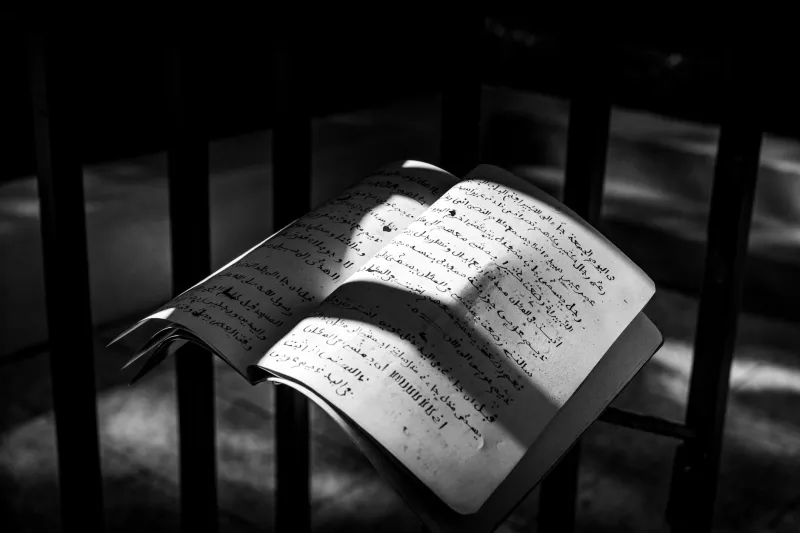
The Book You Cannot Stop Talking About, For All the Wrong Reasons
Ask a passionate reader to name the book that has stayed with them most persistently and the answer may surprise you. It is not always the masterpiece. It is not always the novel that moved them to tears or altered their understanding of the world. Sometimes—more often than the official story of literary devotion tends to acknowledge—it is the book that made them furious.
The book thrown across the room. The book finished in a state of mounting disbelief. The book discussed at length, at volume, with anyone willing to listen, not because it was extraordinary but because it was, in some specific and infuriating way, a betrayal. The book that produced not admiration but a feeling closer to personal affront.
These books stay with us. In some cases, they stay with us longer and more vividly than the ones we admired. That persistence is worth examining.
The Taxonomy of Literary Fury
Not all reading anger is the same, and the distinctions matter. There is the anger of the disappointed: the reader who invested deeply in a novel's premise, its characters, its apparent trajectory, and was then abandoned by an ending that felt unearned, rushed, or simply wrong. This is perhaps the most common variety, and the most forgivable—it is, after all, a form of grief, the mourning of a story that could have been.
There is the anger of the morally offended: the reader confronted with a narrative that asks for sympathy on behalf of a character whose actions seem to the reader genuinely repugnant, with insufficient examination of the repugnance. This is more complicated territory. Fiction has always been in the business of inhabiting perspectives that are uncomfortable, even abhorrent—that is part of its essential function. But there is a meaningful difference between a novel that illuminates a troubling consciousness and one that appears to endorse it without awareness. The reader's anger at the latter is not prudishness. It is a form of moral attention.
Then there is the anger of the betrayed premise: the novel that establishes a set of terms—aesthetic, thematic, tonal—and then abandons them. A story that presents itself as a serious examination of grief and then resolves into sentimentality. A novel whose first half demonstrates genuine ambition and whose second half retreats into convention. The reader who experiences this particular variety of literary anger is responding to something real: the sense that a contract has been broken.
Why Failure Lodges in the Memory
The psychology of negative emotional responses to fiction is genuinely interesting and somewhat counterintuitive. Research into emotional memory suggests that negative experiences—those that produce distress, frustration, or anger—tend to be encoded with greater specificity than neutral or mildly positive ones. The emotional intensity associated with a strong negative reaction appears to enhance the consolidation of the memory, which is why we can often reconstruct the precise moment a book failed us with a clarity we cannot bring to books that simply pleased us.
There is also the matter of cognitive investment. A book that angers us has almost always earned that anger through extended engagement. You cannot be furious at a book you put down after twenty pages. The fury is, in a perverse way, a measure of how much you cared—how far into the story you traveled, how completely you inhabited its world, how much you had at stake in its outcome. The anger is the evidence of the investment.
This is why the books that provoke the strongest negative reactions are rarely the ones we consider genuinely bad. A truly poor novel produces indifference or mild contempt and is quickly forgotten. The novel that generates lasting fury is one that had real promise—that demonstrated enough capability to make its failures sting. The reader who is merely disappointed does not stay angry. The reader who is angry was, at some prior moment, genuinely hopeful.
What Our Fury Reveals About Our Values
There is a diagnostic dimension to reading anger that is easy to overlook in the heat of the response itself. The specific nature of our fury at a novel—what, precisely, we found unforgivable—is a remarkably precise indicator of what we hold to be essential in fiction and, by extension, in the broader human experience.
The reader who cannot forgive a novel for its ending believes, at some fundamental level, in the importance of resolution—in the idea that a story owes its reader a coherent account of its own meaning. The reader who cannot forgive a novel for a morally unreflective protagonist believes in the ethical responsibilities of fiction—in the idea that narrative has obligations beyond entertainment. The reader who cannot forgive a novel for abandoning its own ambitions believes in artistic integrity as a genuine value, not merely an aesthetic preference.
None of these positions is self-evidently correct. There are serious arguments to be made for fiction that refuses resolution, for narrators whose moral blind spots are precisely the point, for novels that transform themselves mid-course. But the anger is not irrational. It is a statement of belief—a declaration of what the reader has decided fiction is for.
The Strange Respect We Owe the Books That Failed Us
There is a case, somewhat uncomfortable to make but worth making, that the novels which provoke our deepest anger deserve a particular form of acknowledgment. They reached us. They found the specific pressure points where our convictions about narrative, morality, and human experience are most sensitive. A book that produces no reaction at all has, in a meaningful sense, passed through us without contact. A book that makes us furious has made contact—has found the places where we are most alive as readers.
This does not mean that the fury is misplaced, or that the book's failures were not real. It means only that the failure and the fury together constitute a genuine literary experience—one that, in its own difficult way, belongs to the category of stories that stay with you.
The books we loved unreservedly shaped us in ways we recognize. The books that made us angry shaped us in ways we are still, perhaps, in the process of understanding.