The Book You Read Twice Is Never the Same Book: On the Transformative Art of Rereading
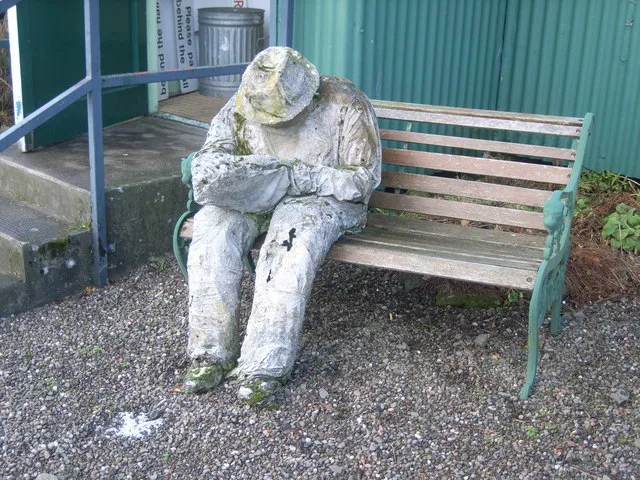
Photo: Nicholas Mutton, CC BY-SA 2.0, via Wikimedia Commons
At some point, most serious readers have had the experience of returning to a novel they loved years earlier and discovering, with a mixture of surprise and quiet unease, that it is not quite the book they remembered. The sentences are the same. The characters bear the same names and make the same choices. The ending has not been altered. And yet something has shifted so fundamentally that the act of reading feels less like revisiting and more like encountering.
That shift is you. And understanding it—really sitting with the implications of how profoundly our relationship to fiction changes as we move through life—might be the most honest argument for treating rereading not as nostalgia, but as one of literature's most rigorous and rewarding disciplines.
The Reader You Were Then
When we read a novel for the first time, we bring a particular version of ourselves to the page. We carry our current anxieties, our recent losses, our unexamined assumptions about how the world works and what people are capable of. We read, in a sense, as the person we happen to be at that moment—and we cannot do otherwise.
This is not a limitation. It is the condition of reading. But it does mean that a first encounter with any significant work of fiction is necessarily partial. We absorb what we are prepared to absorb. We recognize what our experience has given us the vocabulary to recognize. And we miss, with perfect efficiency, everything that lies beyond the boundaries of who we currently are.
The college student who reads The Great Gatsby for the first time is reading a novel about ambition and romantic obsession. The forty-year-old who returns to it is reading, in all likelihood, a novel about the stories we tell ourselves in order to keep moving—and the particular American cruelty of a culture that sells those stories while knowing they are false. Both readings are valid. Neither is complete. And the distance between them is a precise measurement of everything that happened in the intervening years.
Dramatic Irony as a Rereader's Gift
One of the formal pleasures that rereading uniquely offers is the experience of dramatic irony at full saturation. On a first read, we move through a narrative in a state of genuine uncertainty. We do not know which characters will survive, which relationships will fracture, which early detail will become devastating in retrospect. We are, in the most literal sense, reading forward.
On a second read, we move through the same text in possession of its ending—and this knowledge transforms nearly every page. The offhand remark in chapter three that we barely registered on first encounter now lands with tremendous weight. The moment when a character makes a choice that seemed reasonable at the time now reads as the hinge point of the entire tragedy. The author's foreshadowing, which was designed to be invisible on first pass, becomes a kind of conversation between writer and rereader—an acknowledgment that the book was always holding more than it initially appeared to offer.
This is not a lesser form of reading. In many respects, it is a more complete one. The reader who has experienced a novel's ending brings to each scene a dual awareness: the scene as it presents itself in the moment, and the scene as it will be understood from the far side of the narrative. Holding both simultaneously is an act of sophisticated literary attention that first-time readers, by definition, cannot perform.
What Changes When Life Does
Beyond the formal pleasures of rereading, there is the more personal dimension: the way that life experience recontextualizes fiction in ways that can feel almost uncanny.
A novel about grief reads differently before you have lost someone. A story about parenting reads differently once you are responsible for a child. Fiction that deals with professional failure, with the slow erosion of a marriage, with the particular loneliness of middle age—all of it shifts register when the reader has moved from observing those experiences from a distance to having lived through them.
This is not merely a matter of increased empathy, though that is part of it. It is also a matter of precision. When a novelist has described something accurately—really accurately, in the way that great writers do—returning to that description after you have experienced the thing itself produces a recognition that is almost physical. That is exactly right, you think. How did they know? And the answer, of course, is that they knew because all good fiction is an act of careful, disciplined attention to human experience—and that attention does not expire. It waits for the reader to catch up.
The Literary Knowledge You Bring Back
Readers who have spent years with fiction also return to earlier loves with a more developed literary vocabulary—and this, too, changes what they find.
The reader who has since encountered other works by the same author, or who has read the criticism surrounding a novel, or who has simply read more widely across a tradition, brings analytical tools to a reread that were simply not available the first time. Structural choices that seemed invisible become legible. Influences become apparent. The conversation a novel is having with other novels in its tradition—a conversation that was always there—becomes audible.
This is one of the reasons that truly significant works of fiction tend to reward rereading in ways that more functional narratives do not. A novel built primarily around plot mechanics gives the rereader relatively little to discover once the plot is known. A novel built around language, structure, character psychology, and thematic complexity gives the rereader an entirely new set of objects to examine. The plot may be familiar, but the architecture never exhausts itself.
The Argument Against Rereading—and Why It Fails
The most common objection to deliberate rereading is a practical one: there are too many books and too little time. Why return to something you have already read when there are so many unread works waiting?
This is a reasonable concern, and it should not be dismissed entirely. There is genuine value in breadth of reading, and a reader who only ever returns to the same small shelf of favorites is missing something important about the range of human literary expression.
But the argument proves too much. Applied consistently, it would mean that no experience worth having should ever be repeated—no piece of music listened to twice, no landscape revisited, no friendship deepened through continued return. We do not accept this logic in other areas of our lives, and there is no compelling reason to accept it with fiction.
More importantly, the argument misunderstands what rereading is. It treats a book as a fixed quantity of information that, once processed, has been fully consumed. But literature is not information. It is an ongoing relationship between a text and a reader—and like all relationships, it changes as the participants change.
Stories That Grow With You
The books that linger long after the last page are, almost without exception, books that have something in reserve. They are constructed with a depth that exceeds any single reading. They are patient in the way that great art is patient—confident that the reader who was not yet ready will return, and that when they do, the work will have something new to offer.
Rereading is the act of honoring that patience. It is the acknowledgment that you have grown enough to see what you could not see before—and the quiet, serious pleasure of discovering that the book was always waiting for you to arrive.