When the Work Escapes the Writer: On Books That Grow Beyond the Hands That Made Them
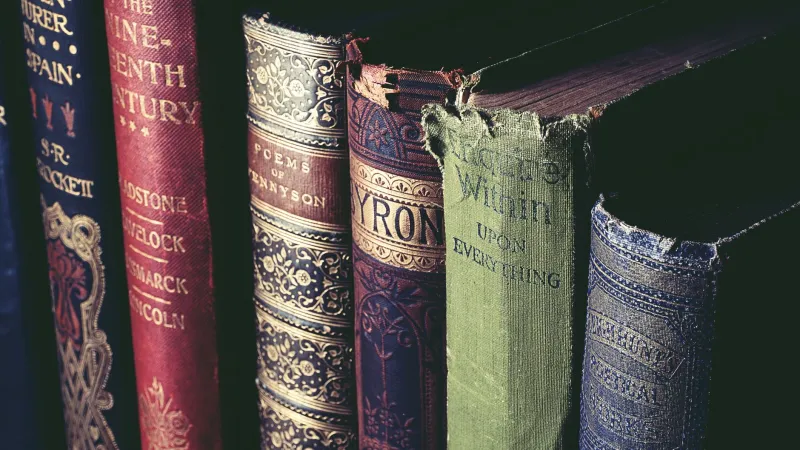
There is a particular kind of literary immortality that has nothing to do with the author's intentions. It arrives uninvited, often decades after publication, sometimes long after the writer's death. A book that was composed in one spirit is received in an entirely different one. A novel written as a private reckoning becomes a public manifesto. A story told for a narrow audience expands to fill a cultural moment its creator never witnessed. In these cases, the work has not merely outlived its author — it has outgrown them.
This is one of the stranger phenomena in literary life, and it deserves more careful attention than it typically receives.
The Moment a Book Stops Belonging to Its Author
F. Scott Fitzgerald died in 1940 believing himself a failure. The Great Gatsby, now enshrined as one of the defining American novels — assigned in high school classrooms from Maine to California, adapted repeatedly for stage and screen, referenced in political speeches and advertising campaigns alike — had sold modestly during his lifetime. Fitzgerald did not live to see his work become synonymous with the American Dream's seductive corruption. The cultural colossus the novel has since become was assembled entirely without him.
One might argue this is simply the nature of posthumous reputation: writers cannot control what happens after they are gone. But the phenomenon extends beyond mere belated recognition. It involves a more active transformation — the work acquiring meanings that actively diverge from, or even contradict, the author's recorded intentions.
Consider Harper Lee. She wrote To Kill a Mockingbird as a nuanced, morally complicated portrait of a Southern childhood, with Atticus Finch as a figure of genuine but limited courage. Over the decades, readers and educators collapsed that complexity into something simpler: a straightforward hero, a clean moral fable, a reassuring story about white goodness in the face of injustice. When Go Set a Watchman appeared in 2015 and revealed a more compromised Atticus, the public reaction suggested that many readers felt personally betrayed — not by Lee, but by the version of the book they had been carrying in their minds for fifty years. That version, in a meaningful sense, was no longer hers.
Readers as Collaborators
Roland Barthes famously declared the death of the author in 1967, arguing that the moment a text is released into the world, the writer's intentions become irrelevant — what matters is the meaning produced in the encounter between text and reader. While that position remains philosophically contested, the lived experience of literary history lends it a certain uncomfortable credibility.
Readers do not passively receive a book. They bring to it their own grief, their politics, their particular historical moment, their unresolved questions. Over time, those accumulated responses calcify into something that functions almost like a second text — a cultural document layered atop the original. The book that exists in the public imagination is often a composite creature: part what the author wrote, part what generations of readers needed it to mean.
This process is especially visible with works that become political touchstones. George Orwell wrote 1984 as a specific warning about Stalinist totalitarianism, drawing on his experiences with Soviet propaganda and the Spanish Civil War. In the decades since, the novel has been claimed with equal fervor by conservatives warning about government overreach and by progressives denouncing surveillance capitalism. Orwell, a committed democratic socialist, would almost certainly have objected to many of the uses to which his work has been put. Yet those uses persist, because the book has become larger than any single political reading — including his own.
The Danger and the Gift
There is something troubling about this process, and it would be dishonest to celebrate it without qualification. When a work is stripped of its historical context and refashioned to serve contemporary purposes, something is genuinely lost. The author's specific experience, the precise cultural anxieties that shaped the work, the deliberate choices embedded in its structure — all of these can be flattened or erased when a book is recruited into a cause it was never designed to serve.
And yet there is also something remarkable in it. The fact that Their Eyes Were Watching God was largely dismissed upon its 1937 publication — found too apolitical by some critics, too folkloric by others — and has since become a cornerstone of American literature and a formative text for generations of Black women writers, suggests that books sometimes carry a significance their original moment was not equipped to recognize. Zora Neale Hurston did not live to see her novel's full vindication, but the vindication was real. The work contained something that outlasted the prejudices of its first reception.
In this sense, the reader's role in constructing a book's legacy is not merely an act of distortion. It can be an act of recovery — a retrieval of meanings that were always latent in the text, waiting for an audience capable of receiving them.
The Stories That Stay
What distinguishes the books that undergo this transformation from those that simply fade? It is not always literary quality, though quality often plays a role. It is something closer to a quality of open necessity — a sense that the book is addressing questions that will not stop being asked, even as the specific answers it offers become historically dated.
The books that outlive their authors in this expansive, culturally generative way tend to be the ones that locate something true about human experience at a level deeper than their particular historical moment. They speak to the shape of longing, or the architecture of injustice, or the texture of grief in ways that readers in entirely different circumstances recognize as their own.
This is, perhaps, the most honest definition of a lasting book: not one that preserves its author's intentions intact, but one that remains alive enough to be argued over, reinterpreted, and claimed anew by people the author never imagined. The writer sets something in motion. What it becomes is, in the most profound sense, a collaboration between the solitary act of creation and the collective act of reading.
The work escapes. And in escaping, it endures.