Ink in the Margins: How Writing in Your Books Makes Them Truly Yours
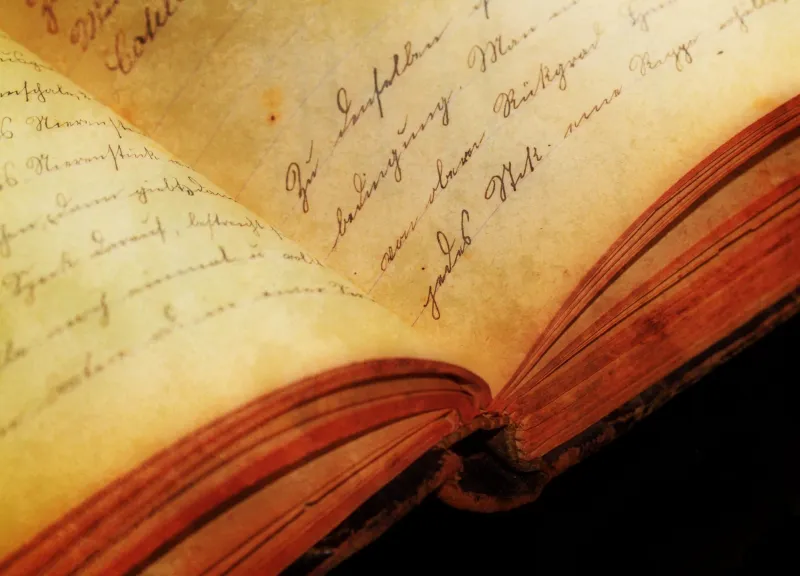
There is a particular kind of reader who arrives at a used bookstore not to browse the spines on the shelves, but to open the covers and look for evidence of previous lives. They are hunting for underlined sentences, asterisks beside pivotal paragraphs, and those cramped, urgent notes scrawled in the white space beside a passage that once moved a stranger to reach for a pen. For this reader, a clean, unmarked book is almost a disappointment—a meal that no one has touched.
For much of the twentieth century, the dominant culture around books held that marking up a personal copy was acceptable, but lending or selling an annotated volume to someone else was a minor social transgression. Library books, of course, were sacred. And yet the tradition of marginalia stretches back centuries, encompassing readers as distinguished as John Adams, Samuel Taylor Coleridge, and Mark Twain—each of whom left trails of handwritten commentary through their personal libraries that scholars still study today. The margin note, it turns out, is not a modern affectation. It is one of the oldest forms of literary criticism we have.
The Case Against the Pristine Page
The argument most often advanced by book purists is one of respect—for the object itself, for the author's intention, and for any future reader who might inherit the volume. There is genuine beauty in an unbroken page, and the aesthetic case for leaving a book unmarked carries real weight. A first edition in fine condition is a different kind of artifact than a heavily annotated reading copy, and no serious collector would argue otherwise.
But the purist position, when applied to everyday reading rather than rare-book collecting, begins to reveal its limitations. It treats the book primarily as an object to be preserved rather than as an experience to be inhabited. When a reader underlines a sentence that strikes them as extraordinary, they are not diminishing the text—they are responding to it. They are, in the most literal sense, entering into dialogue with the author.
Consider what happens neurologically when we read passively versus when we read with a pen in hand. Research in educational psychology has consistently demonstrated that annotation—the act of marking, questioning, and summarizing as one reads—deepens comprehension and significantly improves retention. The physical act of writing a response in the margin forces the brain to process the text at a different level than simple recognition. You are not merely receiving the author's argument; you are meeting it.
A Conversation Across Time
What makes marginalia particularly compelling as a literary phenomenon is the way it transforms a book into a record of multiple encounters. A reader who first annotates a novel at twenty-two and returns to it at forty will find two readers preserved between those covers: the younger self who underlined passages about ambition and heartbreak, and the older self who now pauses at sentences about regret and endurance that were previously invisible.
This layering effect is something no e-reader highlight, however convenient, can fully replicate. There is something irreplaceable about seeing your own handwriting change across decades in the margins of a book you have carried through different chapters of your life. The physical annotation becomes autobiography.
Several readers interviewed for this piece described the experience in strikingly similar terms. A professor of American literature based in Chicago noted that her annotated copy of Beloved contains four distinct layers of marginalia accumulated over thirty years of teaching Toni Morrison. "The notes from my first reading are almost embarrassingly thin," she said. "By the fourth pass, I'm arguing with myself in the margins. That argument is more interesting to me now than any critical essay I've published."
A novelist from Austin described the habit of reading with a fine-point pen as something he inherited from his father. "My dad's copy of The Great Gatsby had these tiny, careful notes in blue ink throughout. When he died, that book was the first thing I asked for. I didn't want the clean copy on the shelf. I wanted the one he'd touched."
The Social Life of Annotated Books
One of the more unexpected developments in contemporary reading culture has been the emergence of annotation as a form of social currency. On platforms like TikTok and Instagram, readers now photograph their annotated pages and share them with audiences of thousands—a practice that would have baffled the book-as-sacred-object traditionalists of earlier generations. The hashtag #annotatedbooks has accumulated hundreds of thousands of posts, with readers showcasing color-coded systems, elaborate symbols, and handwritten responses that sometimes rival the original text in their emotional intensity.
This social dimension reframes marginalia not as a private act but as a form of literary performance and community-building. When a reader shares an annotated page, they are inviting others into their interpretive process—making visible the usually hidden work of active reading. In doing so, they are participating in a tradition that stretches from the medieval scriptoriums where monks wrote glosses beside sacred texts to the coffeehouses of the Enlightenment where books were passed from hand to hand with commentary attached.
What Annotation Asks of Us
There is, finally, something honest about the annotated book that the pristine copy cannot claim. A clean volume suggests that reading is a passive, consumptive act—that the reader arrives, receives, and departs without leaving a trace. The annotated book tells a different story. It says: I was here. I disagreed with this. I loved this. I did not understand this and I want to return to it. It insists that reading is not a transaction but a relationship.
For those who have never tried it, the recommendation is simple: find a book you love, or one that challenges you, and permit yourself to write in it. Start small—an underline, a question mark, a single word in the margin. What you will discover, almost immediately, is that the text becomes more vivid, more personal, and more permanent. The story does not belong less to the author for having your handwriting in it. It belongs more fully to both of you.
Stories, after all, only stay with us when we let them in. And sometimes, letting them in means picking up a pen.