When the World Goes Quiet: The Strange Power of Reading After Dark
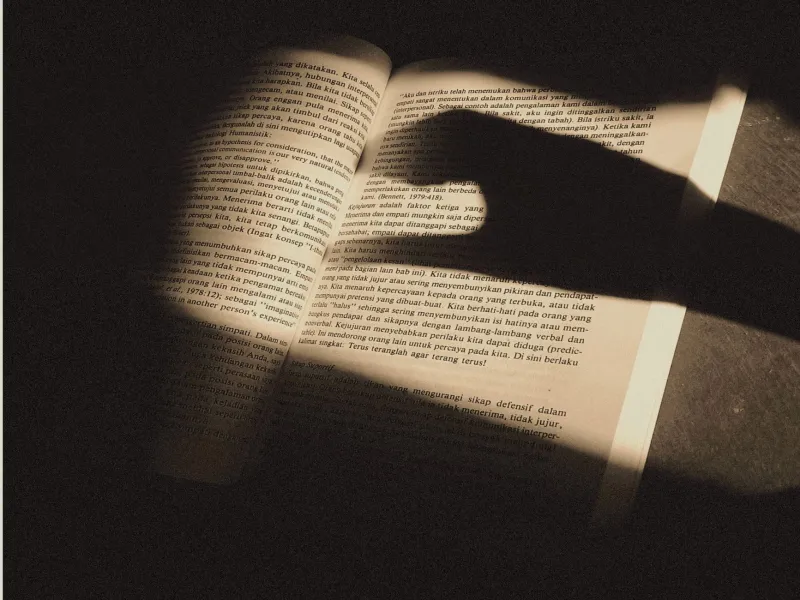
The alarm is set for six-thirty. The lamp on the nightstand casts a warm, narrow light across the page. Somewhere outside, a car passes — the last one for a while — and then there is nothing but silence and the sound of a story insisting that you stay just a little longer. You tell yourself one more chapter. You always tell yourself one more chapter.
Nighttime reading is its own category of experience, distinct from the afternoon session on the porch or the lunch-break paragraph grabbed between bites. It operates under different rules, different pressures, and — for many devoted readers — a different emotional register entirely. The question worth asking is not simply why we do it, but what it reveals about the relationship between literature and the human mind when both are stripped of distraction.
The Psychology of Diminished Resistance
During the day, the mind is a crowded place. Obligations crowd the margins of every paragraph. A work email surfaces uninvited. The grocery list reasserts itself mid-sentence. Cognitive psychologists refer to this as attentional competition — the constant negotiation between what we intend to focus on and what our environment demands we notice instead.
After midnight, that competition largely dissolves. The inbox goes quiet. The phone stops vibrating. The particular American anxiety of productivity — the nagging sense that leisure must be earned — loses its grip somewhere around the eleventh hour. What remains is a reader and a text, with very little standing between them.
This reduction in cognitive interference does more than improve concentration. It lowers emotional defenses as well. Readers who might approach a difficult passage with mild detachment during the afternoon may find themselves genuinely undone by it at two in the morning. The walls come down. The story moves in.
Darkness as a Literary Setting
There is also something worth noting about the physical environment itself. Reading in darkness — or near-darkness — is not merely a practical circumstance. It is a condition that mirrors the experience many books are trying to create.
Consider the novels most commonly associated with late-night reading: psychological thrillers, literary fiction with unreliable narrators, slow-burning mysteries, and those expansive family sagas that seem to exist outside of ordinary time. These are books that thrive on enclosure, on the sensation of a world narrowed to the boundaries of a single story. Reading them in a quiet house, with the rest of the world genuinely asleep, is to inhabit that enclosure rather than merely imagine it.
Edgar Allan Poe understood this instinctively. He argued that a short story should be read in a single sitting, precisely because the sustained mood it required could not survive interruption. The same logic applies, at a grander scale, to the novel consumed across a sequence of late nights. The darkness is not incidental. It is part of the atmosphere the reader brings to the page.
The Intimacy of the Uninterrupted Hour
There is a particular kind of intimacy available only to the reader who has outlasted everyone else in the household. The children are asleep. A partner breathes steadily in the next room. The dog has stopped requesting attention. In this solitude — chosen, temporary, and slightly transgressive — a book becomes something closer to a confidence than a text.
This is not a new observation. Writers have long understood that their best readers are the ones who meet them in that unguarded state. The literary experience is, at its core, a private one: one consciousness encountering another across the medium of language. Nighttime strips away the performance of reading — the book club discussion, the social media post, the recommendation to a colleague — and leaves only the encounter itself.
For many readers, this is where the most lasting impressions are formed. The passages that lodge themselves permanently in memory are rarely the ones encountered on a Tuesday afternoon. They are the ones read at one in the morning, when the mind was open and the world was still.
Anticipation and the Unputdownable Book
Readers often describe the late-night reading experience in terms of compulsion — as though the book were doing something to them rather than the reverse. This language is worth taking seriously. Narrative tension, when it operates at full strength, triggers genuine physiological responses: elevated heart rate, heightened alertness, the suppression of the fatigue signals that would otherwise send a person to sleep.
This is the mechanism behind what publishers call the unputdownable book, and it functions most effectively at night for a simple reason: the contrast is sharpest. During the day, the body has other sources of stimulation. At midnight, the only thing keeping a reader awake is the story. When a novel is doing its job — when the next revelation feels genuinely necessary — the body cooperates. Sleep becomes, for a few hours, irrelevant.
This is also why certain books feel different when finished at dawn than they would have felt finished at noon. The sleep deprivation is part of the experience. The slight disorientation of a mind that has been running on narrative adrenaline for hours lends a particular quality to the final pages — a rawness, an openness to meaning, that a well-rested reader might not access as readily.
The Morning After
There is a specific kind of morning that follows a night of serious reading. The alarm sounds and the book is still on the nightstand, perhaps face-down on the last page. The story has not yet released its hold. The characters move through the first hours of the day like figures glimpsed in peripheral vision.
This is the measure of a book that has done its work. Not the review, not the award, not the recommendation — but the way it persists into waking life, coloring the ordinary world with the residue of its imagined one.
Readers who stay up too late with books are not, as they sometimes half-jokingly claim, making poor decisions. They are honoring a contract that literature has always offered: the promise that a story worth telling is worth losing sleep over. That some books deserve the night, with all its quiet and its lowered defenses and its particular willingness to be moved.
The alarm will sound when it sounds. The chapter can wait for no one. And the lamp stays on.