The Lightning-Strike Sentence: Recognizing a Book That Will Remake You

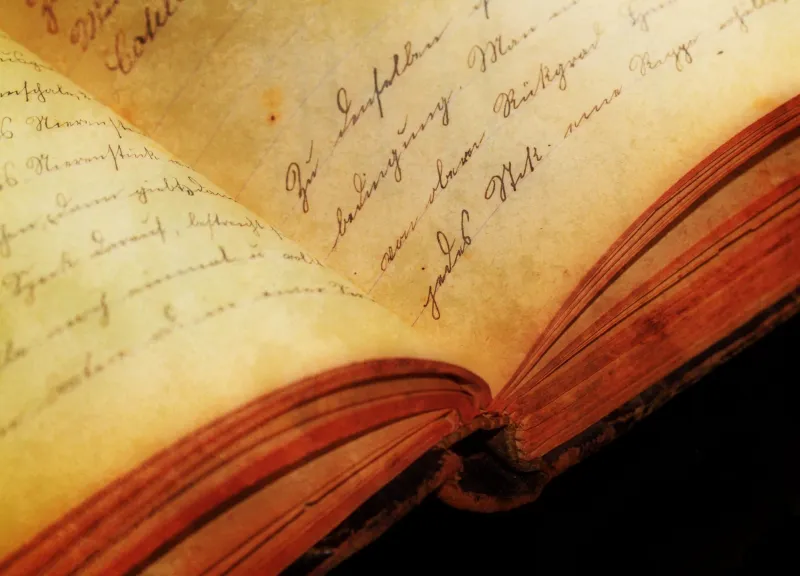
Photo: Nenad Stojkovic, CC BY 4.0, via Wikimedia Commons
Most books announce themselves modestly. They open a door, invite you inside, and offer you a chair. You sit. You read. The experience is pleasant, perhaps even memorable, and when you close the cover you carry away a general warmth—the narrative equivalent of a satisfying meal whose specific flavors you cannot quite recall the following morning.
And then there are the other books.
These are the ones that do not invite you in so much as they reach through the page and take hold of you. The recognition arrives suddenly, sometimes in the middle of a sentence, sometimes at the end of a paragraph you find yourself reading twice before you can move forward. Something has changed. The room around you recedes. The particular quality of the light shifts. You become aware—with a certainty that is difficult to articulate but impossible to dismiss—that you are in the presence of something that will not leave you entirely when you put it down.
Readers who love books deeply know this experience well. The question worth examining is what, precisely, causes it.
The Architecture of the Arresting Opening
Craft is rarely accidental. When an author produces an opening that stops readers cold, the effect is almost always the product of deliberate, painstaking construction—even when it reads as effortless.
Consider what the most arresting first lines accomplish simultaneously. They establish a narrative voice so distinctive that it feels like hearing a new instrument for the first time. They introduce a tension or a strangeness that demands resolution. They make a tacit promise to the reader: stay with me, and I will show you something you have not seen before.
Take the famous opening of Flannery O'Connor's "A Good Man Is Hard to Find," in which the grandmother's casual moral blindness is established with such economy and precision that the story's terrible conclusion feels, in retrospect, inevitable from the very first paragraph. Or consider the opening pages of Toni Morrison's Beloved, where the weight of grief and haunting is rendered with a density of language that announces, without ambiguity, that this will be a book demanding full participation from its reader.
What these openings share is a quality of compression. An enormous amount of information—emotional, thematic, tonal—is delivered in a very small space. The reader's nervous system registers the weight of it before the conscious mind has fully processed what it has received.
What Readers Actually Feel
When readers describe the bookmark moment—that instant of recognition when they know a book is extraordinary—they tend to reach for physical metaphors. A sensation in the chest. The feeling of the floor dropping slightly. A sudden stillness, as though the ordinary ambient noise of daily life has been briefly suspended.
One reader, reflecting on her first encounter with Marilynne Robinson's Gilead, described it this way: "I was maybe twenty pages in, and John Ames was writing to his young son about watching the sunrise, and I had to set the book down and just sit with it for a moment. It wasn't that the writing was showy. It was the opposite—it was so quiet and so true that it felt like something private, like I had been handed a letter not meant for me."
That quality of accidental intimacy—the sense that the writing was not performing for an audience but simply, honestly, rendering something real—is one of the most reliable markers of a book that will stay.
Another reader recalled his introduction to Denis Johnson's Jesus' Son: "The sentences were strange in a way I couldn't explain. They didn't work the way sentences were supposed to work, and yet they were more accurate than anything I'd read. I kept thinking: how did he know that? How did he know exactly that?"
The Technical Machinery Beneath the Magic
For writers and serious readers alike, it is worth examining the specific techniques that produce this response.
Specificity over generality. The most arresting writing tends to anchor itself in precise, unexpected detail rather than broad description. A character who wears "a blue coat" is forgettable. A character whose coat has a button missing on the left cuff, who has not replaced it in three years because the act of replacing it would constitute a form of hope she is not yet ready to sustain—that character has entered the reader's nervous system.
A voice that takes a position. Narrative voices that feel genuinely singular—that have opinions, idiosyncrasies, and a particular way of seeing the world—generate the sense that the reader is in the company of an actual consciousness rather than a neutral delivery mechanism for plot information. The reader does not merely observe; the reader inhabits.
The early surprise. Many books that produce the lightning-strike effect do so partly by defying an expectation the reader did not know they held. The genre shifts slightly. The tone undercuts itself in an unexpected way. A moment of apparent sentimentality is complicated by a single, precise detail. The reader's interpretive framework is gently destabilized, and the resulting alertness—the heightened attention that comes from not being entirely certain what kind of book this is—produces a state of readiness that the best writers then exploit to devastating effect.
Why Some Books Find Us at the Right Moment
It would be incomplete to discuss the bookmark moment without acknowledging the role the reader plays in producing it. The same book, encountered at different points in a life, can read as merely competent or as transformative. The lightning-strike experience is partly a function of the text and partly a function of the reader's particular readiness to receive it.
This is not a diminishment of the book's power. If anything, it speaks to the sophistication of what great literature attempts: it does not merely deliver a story. It creates the conditions for a specific kind of recognition, and it waits for the reader who needs it.
The books that remake us tend to arrive when we are, in some way we may not have consciously acknowledged, ready to be remade. The craft of the author opens the door. Something in the reader's own interior life walks through it.
Carrying the Recognition Forward
For those who love books deeply, the bookmark moment is among the most reliable pleasures that reading offers—not the pleasure of comfort or escape, but the rarer, more demanding pleasure of being enlarged. Of finishing a first chapter and understanding that you will not come away from this book the same person who opened it.
That is, in the end, what the best writing does. It does not merely tell you something. It changes the equipment with which you receive the world. And the moment you sense that happening—the moment the sentence arrives that makes you set the book down and breathe—is the moment reading becomes something more than a pastime.
It becomes a reckoning.