The Interrupted Page: What Returning to an Abandoned Book Reveals About Who You've Become
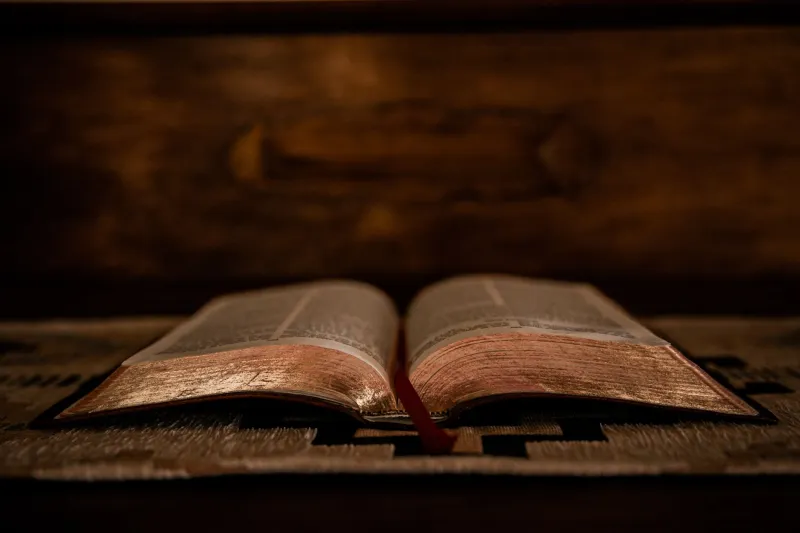
There is a particular strangeness in opening a book you set down months or years ago, finding the bookmark still lodged between pages like a fossil pressed into sediment. The object itself — a coffee-shop receipt, a folded envelope corner, perhaps an actual ribbon sewn into the spine — has been waiting with a patience you did not ask for. It marks not only a page but a version of you that no longer quite exists.
Most readers have experienced this. You abandon a novel in October. Life intervenes in the way that life reliably does. By March, the book has migrated from nightstand to shelf to the bottom of a bag, and the question of whether to return to it takes on a weight disproportionate to the object itself. When you finally do open it again, the bookmark is still there. And so, in some ghostly sense, are you.
The Bookmark as a Record of Interrupted Intent
A bookmark does not merely hold a place. It holds a moment — the specific pressure of a particular evening, the mood you carried into those pages, the version of the story you were constructing in your mind before something pulled you away. When you return, you are not simply resuming a narrative. You are re-entering a relationship that has been paused on one side only.
The book, of course, has not changed. Its sentences remain exactly as they were. But the reader has moved — through experience, loss, distraction, growth, or simple forgetfulness — and the gap between the person who placed the bookmark and the person now lifting it can be considerable. This asymmetry is what makes the return so quietly unsettling. You are expected to pick up a conversation that only one party remembers.
This is not a small thing. Reading is not a passive absorption of information. It is an active construction of meaning, and that construction is always filtered through the particular consciousness you bring to the page on any given day. The reader who stopped at chapter seven in autumn is not the same reader reopening the book in spring. The words will land differently. Certain passages that once seemed unremarkable may now feel pointed, even urgent. Others that once moved you may now seem flat.
The Sunk Cost of the Unfinished Story
There is, admittedly, an element of stubbornness in the decision to resume rather than restart. Behavioral economists have long documented the sunk cost fallacy — the human tendency to continue investing in something simply because we have already invested in it, regardless of whether continuing makes rational sense. Reading is not immune to this tendency.
We feel, often irrationally, that we owe the book a completion. That the hours already spent reading the first half represent a debt that only finishing can settle. This feeling intensifies when the bookmark is still in place, because the bookmark is a physical reminder of prior commitment. It does not allow us to pretend the book is new. It insists on history.
And yet the sunk cost framing, while accurate in a narrow sense, misses something important. The desire to resume is not always a failure of rationality. Sometimes it is a form of fidelity — a refusal to abandon a story that once mattered, even if the reasons it mattered have shifted.
Resuming vs. Restarting: A More Honest Choice Than It Appears
The choice between resuming and restarting a long-abandoned book is, at its core, a question about how we understand the self across time. To restart is to acknowledge the discontinuity — to admit that the person who began this novel is sufficiently different from the person now holding it that starting fresh is the more honest approach. To resume is to insist on a thread of continuity, to claim that the reader who placed the bookmark and the reader now returning are, despite everything, the same person.
Neither choice is wrong. But each carries its own implications.
Restarting often produces the richer experience, particularly with complex literary fiction. Coming to a demanding novel without the half-formed impressions of a prior interrupted reading allows the work to make its full case from the beginning. The reader encounters the architecture of the book as the author intended — not as a structure half-explored and then abandoned.
Resuming, however, has its own peculiar rewards. There is something genuinely moving about reading forward from where a former self stopped, noticing how the story lands differently now, how certain lines seem to anticipate things you have since lived through. The bookmark becomes less a practical tool and more a threshold — the point at which the past reader's experience ends and the present reader's begins.
What the Abandoned Book Asks of Us
Not every abandoned book deserves a return. Some were set down for good reason — the writing did not hold, the story failed to earn its premise, or the moment in which the book might have meant something to you has simply passed. There is no obligation in reading, and the freedom to put a book down permanently is one that should be exercised without guilt.
But for those books that linger — that occupy a specific, unresolved space on the shelf — the act of return is worth examining honestly. Why are you going back? Is it genuine curiosity about how the story ends, or is it the discomfort of incompletion? Is it loyalty to the past self who began the book, or is it the nagging suspicion that the book might have something to say to the person you have since become?
These are not rhetorical questions. They are the kind of questions that good reading — and good writing — consistently asks us to sit with.
The Stories That Wait
There is a reason certain books stay on the shelf for years without being discarded, even when they go unread. We sense, however vaguely, that they are not finished with us. The bookmark marks the edge of a conversation we were not ready to complete. Returning to it, when the time is finally right, is one of the stranger and more honest pleasures that reading makes available.
The page you stopped on is still there. So, in some essential way, is the person who stopped on it. What you do with the distance between those two facts — that is the real story.