The Well-Worn Copy: Why a Marked-Up Book Is the Most Honest One You Own
The Case Against the Untouched Page
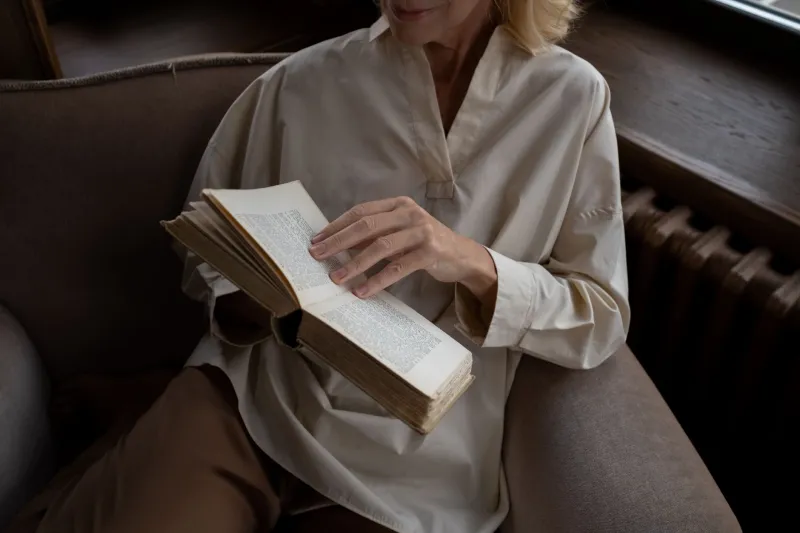
Walk into any used bookshop in America and you will find, on the better shelves, two distinct categories of old book. The first is pristine: tight spine, clean margins, pages that fan open with a whisper of stiffness, as though the book has been waiting patiently for its first real reader. The second is something else entirely—soft at the corners, penciled throughout, occasionally coffee-stained, the spine cracked at the passages its previous owner returned to most. These two books are not the same object, even if the title page is identical.
The second book has been read. Fully, urgently, and by someone who was not content to remain a passive recipient of the text. That person argued back. They underlined the sentences that struck them as true and bracketed the ones they found suspect. They folded the corner of the page where something important happened, not because they lacked a bookmark, but because they needed to return quickly, the way you return to a room where something significant was said.
The question of which book is more valuable is, in the end, not a question about condition. It is a question about what books are actually for.
Annotation as Autobiography
There is a long and distinguished tradition of readers who wrote in their books. John Adams filled his margins with arguments. Sylvia Plath annotated with a ferocity that scholars still study. Samuel Taylor Coleridge was so prodigious a marginal commentator that his notes were eventually collected and published as a separate volume. These are extreme examples, but they point toward something that ordinary readers have always understood intuitively: to write in a book is to enter into a relationship with it.
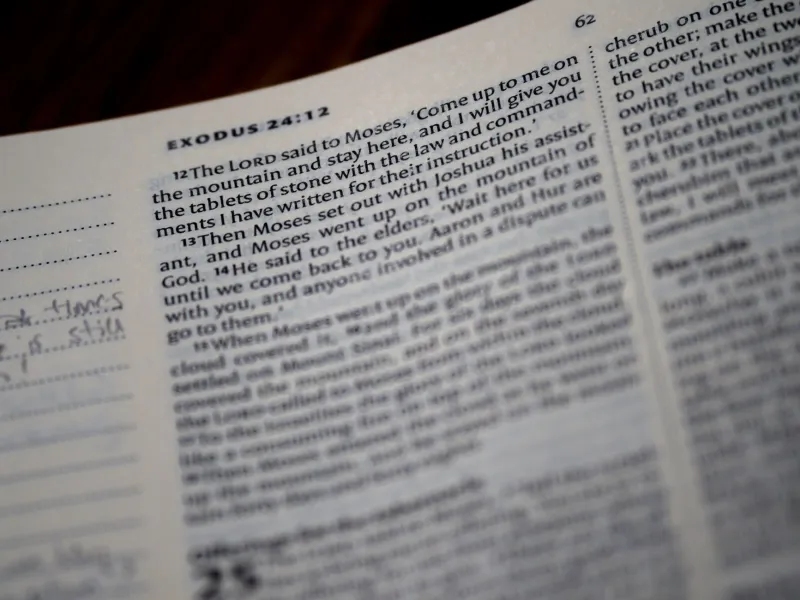
Annotation is not defacement. It is dialogue. When a reader underlines a sentence, they are marking the moment of recognition—the instant when language on a page aligned precisely with something they already knew but had not yet found words for. When they write a question in the margin, they are recording the moment the text pushed back against their assumptions. These marks are not interruptions of the reading experience. They are the reading experience made visible.
The annotated book becomes, over time, a kind of autobiography. Return to a heavily marked copy of something you read at twenty-two, and you will find a portrait of the person you were then: what troubled you, what moved you, what you were certain of and what you were working out. The marginalia are a time capsule in a way that memory alone cannot replicate, because memory edits and revises, while the penciled note in the margin simply sits there, fixed and honest.
The Folded Corner and Its Discontents
Few reading habits inspire more passionate disagreement than the dog-ear. To fold the corner of a page is, for some readers, an act of casual violence against a beloved object. For others, it is the most natural thing in the world—a quick, reliable mark made with the materials at hand, requiring no bookmark to be located or purchased or remembered.
The debate is worth examining not because either position is obviously correct, but because of what the intensity of the disagreement reveals. Books occupy an unusual position in American cultural life. They are simultaneously commodities, tools, aesthetic objects, and, for many readers, something closer to companions. The question of how to treat them is therefore never purely practical. It carries weight because the book itself carries weight.
But the argument against the folded corner often conflates two different concerns: the preservation of the physical object and the preservation of the text. The text, of course, is not damaged by a folded corner. What is at stake is the object—and the object's value, as argued here, is not diminished but enriched by evidence of genuine use.
Coffee Stains, Cracked Spines, and the Proof of a Long Afternoon
Consider what a coffee stain actually records. It records the morning, or the long Sunday afternoon, when someone sat with this book long enough to finish an entire cup of coffee in its company. It records distraction and absorption and the particular pleasure of reading so deeply that the cup went cold. It records, in short, a moment of genuine engagement—which is precisely what books are designed to produce.
The cracked spine tells a similar story. A spine cracks when a book has been held open repeatedly, sometimes at the same passage. It is the physical record of return. The reader came back to this page, and then came back again, because something here continued to yield meaning on re-examination. That is not damage. That is the highest compliment a reader can pay a text.
Pristine books have their place. A first edition kept in archival conditions has genuine historical value, and there is real pleasure in owning a beautiful, well-preserved volume. But the pristine copy and the working copy serve different purposes, and it is a mistake to treat the standards of the former as universal. A book that has never been marked in, never been carried in a bag until its cover softened, never been read in the bath or on the subway or under a tree—that book has been admired, perhaps, but it has not been fully used.
The Copy No One Else Can Replicate
There is a particular kind of loss that occurs when a heavily annotated personal copy is discarded—thrown away after a move, donated without thought, sold to a used bookshop where the new owner may or may not notice what they have acquired. What is lost is not the text, which survives in countless other editions, but the record of one reader's encounter with it.
This is why the well-worn personal copy is, in a meaningful sense, irreplaceable. It is not the same book as the clean edition on the shelf. It is a different object: a collaboration between the author and a specific reader, in a specific season of that reader's life, producing something that neither could have made alone.
The stories that stay with us leave marks—on our thinking, on our understanding of what it means to be a person in the world. It seems only fitting that we should, in turn, leave marks on them. A book you have truly lived with should look like it. The evidence of that living is not something to be hidden or apologized for. It is, in the fullest sense, the point.